
10 minute read · Evidence-based
Topic 3 of 6
The hidden driver behind your energy crashes, cravings, and brain fog
You used to be able to skip breakfast or eat a sandwich at your desk without consequences. Now, irregular meals leave you shaky, irritable, or foggy. You crave sugar more intensely than before. Your energy drops dramatically in the afternoon. These are the hallmarks of disrupted blood sugar regulation — and they are a direct consequence of the hormonal changes of perimenopause.
On this page





THE SCIENCE
Why oestrogen decline disrupts blood sugar regulation
Oestrogen is an insulin-sensitising hormone — when it declines during perimenopause, insulin sensitivity decreases with it. The same food your body once processed smoothly now produces larger, more prolonged glucose spikes and a far more erratic energy response. This is not diabetes, but it is a measurable hormonal shift — which is why the same diet that worked at 35 no longer produces the same results at 48.
Simultaneously, declining progesterone reduces the brain’s access to GABA, its primary calming neurotransmitter. The brain compensates by generating a demand for quick glucose — which you experience as intense sugar cravings. These are not weakness or lack of discipline. They are a physiological signal from a brain trying to compensate for reduced neurochemical resources.

ZOE PREDICT study — the landmark finding
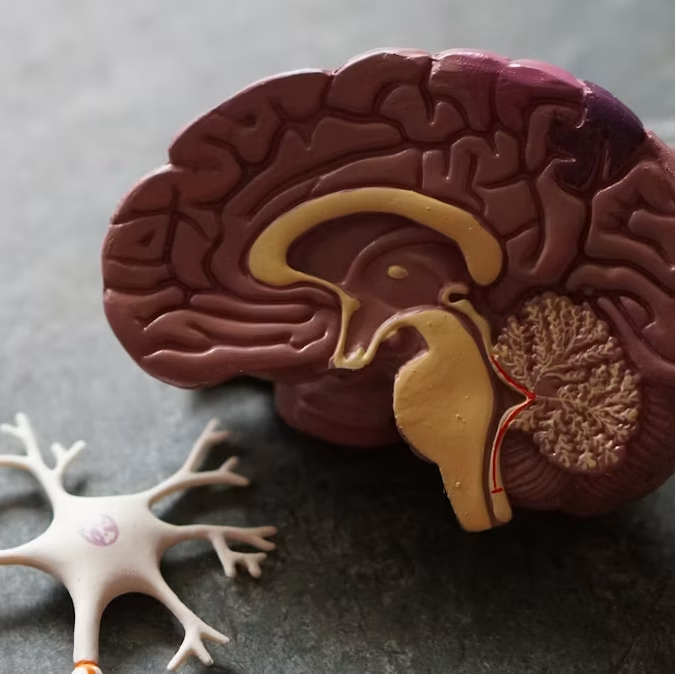
One of the largest nutritional studies ever conducted — 1,000+ participants with continuous glucose monitoring — found that menopause independently worsens post-meal metabolic responses: higher glucose peaks, slower recovery, and greater blood fat elevations, even after controlling for age, BMI, and diet.
Bermingham KM et al. EBioMedicine, 2022 · DOI: 0.1016/j.ebiom.2022.104303
Key finding
40–50%
Estimated reduction in insulin sensitivity in some women during the menopausal transition — comparable to the insulin resistance associated with significant weight gain, yet occurring independently of any dietary or lifestyle changes.
Source: Mauvais-Jarvis F et al., Diabetes, 2020 · PMID: 32312835
The Causes
Three ways hormonal change disrupts your blood sugar
Mechanism 1
Declining oestrogen reduces insulin sensitivity
As oestrogen declines, cells become less efficient at absorbing glucose — forcing the pancreas to produce more insulin to compensate.
- Promotes fat storage, hunger, and further insulin resistance over time
- The same meal hits differently now — your cellular response has changed, not the food
- This shift can happen with no change in diet, weight, or activity level
Mechanism 2
The progesterone-GABA-craving connection
Progesterone converts in the brain into allopregnanolone, which supports GABA — the brain’s calming system. As it declines, the brain seeks rapid relief through glucose.
- Drives intense sugar cravings — particularly in afternoons & evenings
- This is neurological compensation, not a willpower problem
- Stabilising blood sugar directly reduces the frequency of these cravings
Mechanism 3
The sleep–blood sugar vicious cycle
Even one poor night’s sleep reduces insulin sensitivity the next day by suppressing glucose uptake and spiking cortisol — creating a compounding loop.
- Disrupted sleep worsens insulin resistance → worsens cravings → disrupts sleep further
- Women who stabilise blood sugar often report better sleep in 2–3 weeks
- Breaking the cycle from the blood sugar side produces cascading improvements
29%
Reduction in post-meal glucose spike from eating protein before carbohydrates
(Shukla et al., 2015)
30–40%
Lower glucose peak from a 10-min post-meal walk vs sitting
(Buffey et al., 2022)
40–50%
Reduction in insulin sensitivity during the menopausal transition in some women
1 night
Of poor sleep is enough to measurably reduce insulin sensitivity the following day

Strategies
Five strategies to stabilise blood sugar in midlife
Blood sugar balance is one of the fastest-responding areas of midlife health. Many women notice a dramatic improvement in energy, cravings, and brain fog within 7–14 days of implementing the strategies below consistently. You do not need to overhaul your diet — you need to restructure how you eat it.





Strategy 01
Change the order you eat — before you change what you eat
Landmark research has shown that the sequence in which food is eaten at a meal has a significant, measurable impact on post-meal blood glucose — independent of the total amount consumed. Eating vegetables and protein before carbohydrates reduces glucose spikes by up to 30–40% in the same meal. This is a zero-cost, immediately actionable change.
The meal sequence that blunts blood sugar spikes

Vegetables first
Fibre forms a mesh that slows glucose absorption from everything eaten

Then Protein
Stimulates GLP-1 (satiety hormone) and further slows gastric emptying

Carbohydrates
Now absorbed slowly, producing a blunted, more stable glucose curve
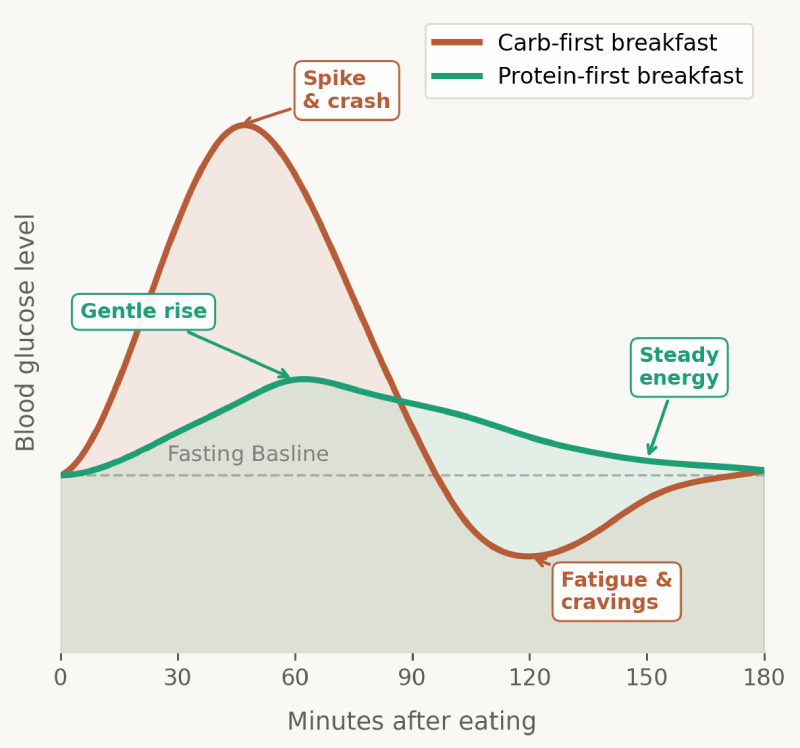
What breakfast does to you blood sugar

Start every meal with vegetables or salad — even a few bites
The soluble fibre in vegetables creates a viscous layer in the small intestine that physically slows the absorption of glucose from carbohydrates eaten afterward. Even eating your salad 5–10 minutes before the rest of the meal produces a measurable difference.

Never eat carbohydrates alone — always pair with protein, fat, or fibre
A piece of toast, a bowl of cereal, a banana, or a handful of crackers eaten alone produces a rapid glucose spike followed by a sharp crash 60–90 minutes later — triggering cravings and fatigue. The pairing is non-negotiable: toast + eggs, banana + nut butter, oats + protein.

Add a tablespoon of apple cider vinegar in water before meals
Acetic acid (the active component of vinegar) slows gastric emptying and reduces post-meal glucose spikes by 20–30% in multiple studies. Use 1 tablespoon in a large glass of water 10–15 minutes before eating. Do not use if you have acid reflux or oesophageal issues.
Strategy 02
Build a blood-sugar-stable breakfast — within 90 minutes of waking
Cortisol is naturally highest in the first 30–45 minutes after waking (the cortisol awakening response) — and cortisol raises blood glucose. Starting the day with a high-carbohydrate or sugar-containing breakfast compounds this morning glucose surge dramatically. A protein-and-fat-anchored breakfast blunts it and sets a far more stable energy pattern for the entire day.
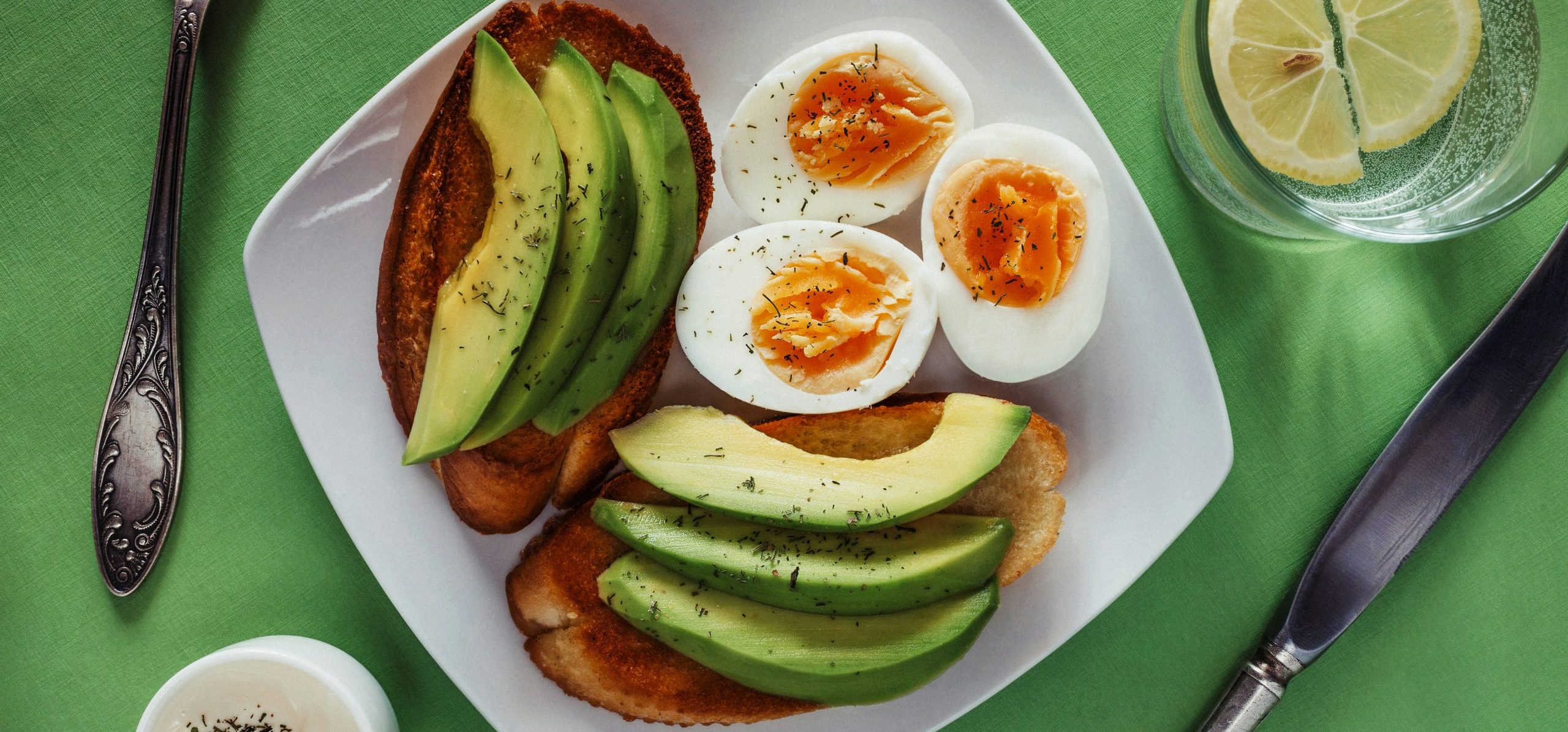
Breakfasts that stabilise blood sugar
Breakfasts that spike blood sugar
Strategy 03
Walk after every meal — especially dinner
A 10–20 minute walk after eating is one of the most consistently effective, evidence-backed interventions for reducing post-meal blood glucose available — and it costs nothing. Muscle contraction during walking stimulates glucose uptake by muscle cells via a mechanism independent of insulin, meaning it works even when insulin sensitivity is reduced.

Walk within 30 minutes of finishing a meal
The post-meal glucose peak typically occurs 20–45 minutes after eating. A gentle walk during this window blunts the peak most effectively. The walk does not need to be vigorous — a comfortable 10-minute stroll produces measurable blood glucose reduction in multiple studies.
Prioritise after dinner if you can only choose one
Insulin sensitivity is at its lowest in the evening. Post-dinner glucose spikes are the largest of the day and are most directly linked to disrupted sleep and visceral fat accumulation. An evening walk is disproportionately high-value compared to any other time of day.
Even two minutes of walking matters — start small
A 2022 meta-analysis found that even very short post-meal walking intervals (as little as 2 minutes) produced significant reductions in blood glucose and blood fat levels compared to sitting. If a full 20-minute walk feels unrealistic in the evenings, a 5-minute walk still meaningfully changes the metabolic picture.


Meta-analysis: post-meal walking and glucose
A 2022 meta-analysis of 7 randomised studies found that post-meal walking for as little as 2–5 minutes produced significant reductions in blood glucose, insulin, and triglyceride responses compared to sitting — with effects consistent across age groups and glucose tolerance status.
Buffey AJ et al. Sports Medicine, 2022 · PMID: 35397031
Strategy 04
Resistance training dramatically improves insulin sensitivity
Skeletal muscle is the largest glucose-disposal organ in the body. When muscle mass is high and muscle cells are trained, they absorb glucose from the bloodstream efficiently — reducing the burden on insulin and improving overall metabolic stability. Resistance training is therefore not just about strength or aesthetics; it is a direct blood sugar management strategy.

Walk within 30 minutes of finishing a meal
The post-meal glucose peak typically occurs 20–45 minutes after eating. A gentle walk during this window blunts the peak most effectively. The walk does not need to be vigorous — a comfortable 10-minute stroll produces measurable blood glucose reduction in multiple studies.
Prioritise after dinner if you can only choose one
Insulin sensitivity is at its lowest in the evening. Post-dinner glucose spikes are the largest of the day and are most directly linked to disrupted sleep and visceral fat accumulation. An evening walk is disproportionately high-value compared to any other time of day.
Strategy 05
Consider tracking with a continuous glucose monitor — even temporarily
Continuous glucose monitors (CGMs) — small patches worn on the arm that provide real-time blood glucose readings — are now available to consumers without a prescription. Two weeks of CGM data is often more educational about your personal metabolism than months of dietary guesswork, because blood glucose responses to food are highly individual.

Identify your personal glucose spike triggers
Rice spikes some women dramatically and others barely at all. Oats affect people very differently depending on gut microbiome composition, meal timing, and sleep quality the night before. Two weeks with a CGM will reveal your personal patterns far more accurately than any generic dietary guideline.
See directly how sleep and stress affect blood sugar
Most women are genuinely surprised to discover that a poor night’s sleep raises fasting glucose the following morning — often by as much as eating a moderate-sized carbohydrate snack. Seeing this data in real time makes the sleep-blood sugar connection visceral and motivating in a way that reading about it rarely does.
Why individual variation matters
Same food, different response
The ZOE PREDICT study found that blood glucose responses to identical meals varied dramatically between individuals — even identical twins. Generic dietary advice ignores this. A CGM makes it personal.
supplements
Three supplements with a credible evidence base for blood sugar in midlife
These are additions to the dietary and lifestyle strategies above — not substitutes for them. Evidence quality and safety profiles vary; notes on each are included.
300–400mg · With meals
Magnesium Glycinate
Magnesium is an essential cofactor in insulin signalling at over 300 enzymatic reactions. Deficiency — which is extremely common in Western diets — directly impairs glucose regulation. The glycinate form additionally supports sleep quality and anxiety, addressing multiple perimenopause symptoms simultaneously.
Hot flashes, night sweats, poor sleep, low mood, brain fog, weight changes, joint pain, and reduced energy.
2–4g per day · In water or smoothie
Myo-Inositol
Inositol acts as a secondary messenger for insulin signalling — essentially amplifying the insulin signal at the cellular level. Strong evidence in women with PCOS (a condition of insulin resistance); emerging evidence supports benefit in perimenopausal insulin resistance. Also has mild anxiolytic effects relevant to the progesterone-GABA depletion mechanism.
Sudden anxiety, inability to wind down, disrupted sleep, irritability, heavier periods, and feeling “on edge.”
500mg · 2–3 × daily with meals
Berberine
Berberine activates AMPK — the same energy-sensing enzyme targeted by metformin — improving glucose uptake and insulin sensitivity. It’s among the most evidence-supported supplements for blood glucose regulation. Note: it’s pharmacologically active and interacts with metformin, blood pressure medications, and anticoagulants, so check with a doctor first.
Symptoms of perimenopause can feel unpredictable, hard to explain, and often misunderstood or missed.

Important: speak to your doctor before starting berberine
Berberine is pharmacologically active and has significant interactions with metformin, antihypertensive medications, and blood thinners. It is safe for most healthy adults but warrants professional review if you take any regular prescription medications.
Recommended tools
Products to support blood sugar balance
Practical tools and evidence-informed products that directly support the strategies on this page.
Monitoring
Continuous Glucose Monitor (Levels / Nutrisense / Dexcom)
Real-time blood glucose data via a small sensor on the arm. The single most educational tool for understanding your personal metabolic responses to food, sleep, stress, and exercise.
Insight: reveals which specific foods spike your blood sugar — highly individual and often surprising
Supplement
Myo-Inositol Powder
(2g per serving)
Tasteless powder that mixes into water, coffee, or a smoothie. Supports insulin receptor signalling and has a mild calming effect — two benefits directly relevant to perimenopause.
Evidence: RCT-supported for insulin resistance in women; good safety and tolerability profile
Supplement
Magnesium Glycinate
(300–400mg)
Essential cofactor for insulin signalling. Also supports sleep quality and GABA activity — addressing the progesterone-GABA craving mechanism alongside blood sugar stabilisation.
Evidence: cofactor at 300+ enzymatic reactions; deficiency directly impairs glucose regulation
Kitchen tool
Apple Cider Vinegar —
raw, with the mother
1 tbsp in a large glass of water before meals. The acetic acid slows gastric emptying and reduces post-meal glucose spikes. Choose unfiltered with visible sediment (the „mother“) for full acetic acid content.
Evidence: 20–30% reduction in post-meal glucose in multiple controlled studies
Kitchen tool
Meal Prep Containers —
glass, portion-sized
Structured meals with a consistent protein and vegetable base are the foundation of blood sugar stability. Prepped meals eliminate the decision fatigue that leads to high-carbohydrate convenience choices.
Practical: removes the conditions that produce blood-sugar-spiking food choices
Supplement
Berberine
(500mg capsules)
Clinically studied for blood glucose regulation. Take with meals to minimise digestive side effects. Check for drug interactions before use — not appropriate if you take metformin or blood pressure medications.
Evidence: multiple RCTs; activates AMPK similarly to metformin; meaningful glucose reduction

Your blood sugar action plan — at a glance
Explore all six topics






Scientific references
- Bermingham KM et al. (2022). Menopause is associated with postprandial metabolism, metabolic health and lifestyle: the ZOE PREDICT study.
EBioMedicine, 85:104303. DOI: 10.1016/j.ebiom.2022.104303 - Mauvais-Jarvis F et al. (2020). Menopausal hormone therapy and type 2 diabetes prevention: mechanisms, evidence and clinical implications.
Diabetes, 69(5), 823–831. PMID: 32312835 - Shukla AP et al. (2015). Food order has a significant impact on postprandial glucose and insulin levels.
Diabetes Care, 38(7), e98–99. PMID: 26106235 - Buffey AJ et al. (2022). The acute effects of interrupting prolonged sitting time with walking on postprandial glucose.
Sports Medicine. PMID: 35397031 - Spiegel K et al. (2005). Sleep loss: a novel risk factor for insulin resistance and Type 2 diabetes.
Journal of Applied Physiology, 99(5), 2008–2019. PMID: 16014402 - Unfer V et al. (2012). Effects of myo-inositol in women with PCOS: a systematic review of randomised controlled trials.
Gynecological Endocrinology. PMID: 22268455 - Yin J et al. (2008). Efficacy of berberine in patients with type 2 diabetes mellitus.
Metabolism, 57(5), 712–717. PMID: 18442638 - Barbagallo M et al. (2015). Magnesium and type 2 diabetes.
World Journal of Diabetes, 6(10), 1152–1157. PMID: 26240700 - Johnston CS et al. (2004). Vinegar improves insulin sensitivity to a high-carbohydrate meal in subjects with insulin resistance or type 2 diabetes.
Diabetes Care, 27(1), 281–282. PMID: 14694010 - Baker FC (2023). Optimising sleep across the menopausal transition.
Climacteric, 26(3), 198–205.PMC10416747
Free resource
Get the Perimenopause Starter Guide
Five science-backed changes to make this week — including how blood sugar fluctuations are driving your afternoon energy crashes, and the exact meal structure that stabilises them.