
I used to sleep. Now I’m awake at 3am.
Why does my body feel so different?
Why do I feel anxious all the time?
When did I stop prioritising myself?
Fatigue that sleep doesn’t fix.
Hot flashes and night sweats.
Weight gain around the middle.
Mood swings that don’t feel like you.
Who this is for
If any of these symptoms sound familiar,
you’re in the right place.
You’ve always held it together — career, family, ageing parents, friendships. You show up, no matter the cost to yourself.
Then somewhere in your late thirties or forties, your body changed the rules. Sleep gets lighter. Moods swing unpredictably. Your memory feels foggier, your energy less reliable. This isn’t in your head — it’s your hormones. As oestrogen & progesterone fluctuate and decline, they affect everything from your brain chemistry to your metabolism to your sleep.
It doesn’t have to feel like this — this site exists to show you why and what you can actually do.
What’s happening in your body
The honest science of midlife hormonal change
Two hormones — oestrogen and progesterone — have been regulating far more than your menstrual cycle for decades. They have shaped your mood, your sleep, your metabolism, your bone density, and your cardiovascular health. During perimenopause and menopause, their levels fluctuate wildly and then decline — and your body notices every change.
This is not your imagination. This is not a lack of resilience. This is physiology — and understanding it is the first step to working with it.

Making sense of hormonal change
Understand the key hormones behind perimenopause and menopause — why symptoms happen, what changes over time, and how to make sense of what you’re feeling.
Your regulating hormone
Oestrogen
Oestrogen is a master regulator that influences almost every system in our body.
- Supports mood, memory, and focus
- Helps regulate temperature and sleep
- Helps support steady energy
- Supports bone and heart health
When it fluctuates, you may feel:
Hot flashes, night sweats, poor sleep, low mood, brain fog, weight changes, joint pain, and reduced energy.
Your calming hormone
Progesterone
Progesterone helps create balance & calm throughout times of hormonal change.
- Supports calm, sleep, and relaxation
- Helps ease stress and anxiety
- Supports hormone balance daily
- Helps support a steady mood
When it drops first, you may feel:
Sudden anxiety, inability to wind down, disrupted sleep, irritability, heavier periods, and feeling “on edge.”
The transition
Perimenopause vs Menopause
Perimenopause can begin in your late 30s or early 40s.
- Hormones fluctuate rather than steadily decline
- Symptoms change over time
- Menopause follows 12 months after your last period
Important to know:
Symptoms of perimenopause can feel unpredictable, hard to explain, and often misunderstood or missed.
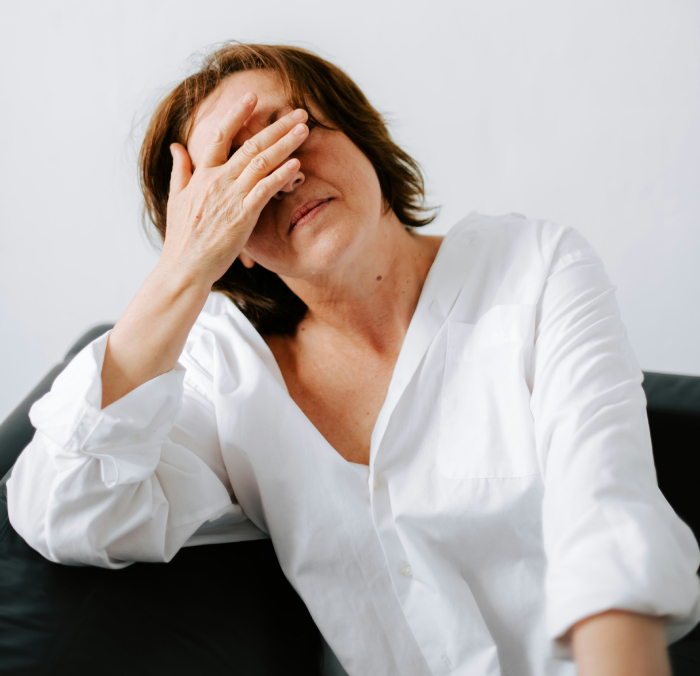
Important to know
Why perimenopause is often harder than menopause itself
During perimenopause, oestrogen and progesterone don’t decline steadily — they surge and plunge, sometimes dramatically within the same week. This erratic pattern is what drives the intensity of symptoms.
Many women are surprised to find that once they reach full menopause and hormones stabilise (at lower levels), they actually feel more consistent, not worse. Understanding this timeline changes how you approach everything that follows.
Your options
Hormone therapy
isn’t your only path.
Hormone Replacement Therapy works well for many women, and there is nothing wrong with choosing it. But it isn’t appropriate for everyone and many women prefer not to use it or aren’t in a position to. If that’s you, this site is built for you.
The science on lifestyle-based interventions for perimenopause and menopause symptoms has advanced significantly in the last decade. Scientific eviews and randomised controlled trials show that targeted changes to how you move, eat, sleep, and manage stress can produce meaningful, measurable improvements in the symptoms that affect your daily life most.

Nutrition
What you eat directly affects hormone metabolism, blood sugar, inflammation, and symptom intensity.

Strength
Resistance and aerobic training reduce hot flashes, protect muscle and bone, and stabilise mood.

Sleep
Sleep quality is both a symptom and a driver of hormonal imbalance. Targeted strategies work.

Practical Action
Habit building, tracking, and small sustainable routines are what turn knowledge into results.
What we cover
Six areas. Real science.
Changes you can actually make.
You don’t need to rely on guesswork. Learn the science behind menopause and discover practical, evidence-based strategies to help you feel stronger, healthier, and more in control — building an approach that works for you and lasts.


1.1B
women worldwide will be in menopause or perimenopause by 20251
70%
of US women aged 35–54 suffer from menopause symptoms affecting mood or mental health2
22%
of US women aged 35-54 report finding it actively difficult to find reliable information2
$22B
lost annually in the US economy from perimenopause-related productivity impacts3
1 United Nations, World Population Prospects 2024 · 2 Carrot Fertility & Olly (2025). The Menopause Report, 2025 · 3 Flo Health / ACOG Economic Analysis, 2025
Sarah age 46
„I spent two years feeling like I was quietly unravelling — exhausted, anxious, not sleeping, putting on weight despite not changing anything. My doctor ran blood tests, said everything was normal, and told me to watch my diet. It was only when I started understanding what was actually happening hormonally that things began to make sense — and I started being able to do something about it.“
Free resource
Get the Perimenopause Starter Guide
A free, practical guide covering the five highest-impact changes you can make right now — based on the best available research on non-hormonal approaches to perimenopause and menopause symptoms. No overwhelm. No fluff. Just the things that actually move the needle.